Coming off GamStop, the official route
This chapter walks through the one route that works for coming off GamStop after your minimum period has ended, and the reasons every advertised alternative to that route does not. It is written to be legible in the difficult minutes in which someone is thinking about ending a self-exclusion, and it is written to be read as public information rather than as a persuasion piece. The site has no interest in whether you continue on the scheme or leave it. The site has an interest in making sure that the decision is your own, not one prompted by the advertising of a third party who has something to sell.
Why this page exists and what it will not do
This page exists because a specific type of advertising has grown up around GamStop. The advertising promises to end a self-exclusion for a fee, to hasten a minimum period, or to help a person on the register access UK-licensed operators before the block has been lifted. The advertising is written to reach people at the moment they are most likely to act against their own interests, and it is written to sound legitimate. That combination is the reason a plain-English page describing the actual mechanics of the scheme sits at this position in the site, ahead of any of the pages that cover the offshore sector. If you have found this page because a search result promised a shortcut, this is not a shortcut. This is the official route.
What this page will not do is tell you whether to come off the scheme. That decision belongs to you, and where the decision is difficult, the National Gambling Helpline on 0808 8020 133 is the free, confidential resource that will speak with you at length before you take a step. What this page will do is explain the six-step process the scheme actually uses, why the minimum period cannot be shortened once active, what the twenty-four hour cool-off is for, what the seven-year auto-extension does when a person on the register does nothing, why the third-party removal services in the market cannot deliver what they advertise, and what harm-reduction routes are available to you during any waiting period you find yourself inside.
The class of copy that this page pushes back against has a set of tells that are worth learning to recognise. It uses the phrase GamStop removal rather than the scheme's own language of ending an exclusion. It attaches urgency to the sale by promising a same-day outcome, a discreet process, or a route the scheme itself does not offer. It gestures at the regulator without ever naming a specific enforcement power the regulator holds, because there is none that authorises what the copy is selling. And it charges a fee, which is the single detail that would settle the question on its own, since the scheme's own route is free and needs no intermediary. If any of those tells appears alongside the search result that brought you here, the piece of copy in front of you is written by an operator or an affiliate whose interest is in your deposit rather than in the honest description of the mechanics of a scheme designed to protect exactly the person the copy is trying to reach.
02The only route that works, in six steps
Step one, wait until your minimum period has ended. The minimum period you selected on registration, being six months, one year or five years, is binding once active. GamStop does not lift the block during that period on any request, on any evidence, from any person. Step two, on or after the day your minimum period ends, go to the GamStop website, sign into the account you registered with, and initiate the request to end your self-exclusion. Step three, complete any additional identity questions the scheme asks at that stage, which are designed to confirm that the request is coming from the registered person rather than from someone using their credentials. Step four, wait twenty-four hours. The cool-off runs between the moment of your request and the moment your details are removed from the register. Step five, watch for the confirmation communication from the scheme. Until that message arrives, treat the block as active. Step six, if you decide during the cool-off that you have changed your mind, the request can be cancelled by contacting the scheme, and the block will continue.
None of those steps involves a payment to a third party. None of those steps involves a service outside the scheme. None of those steps requires a legal representative, a doctor, an advocate or a friend. The route is the route the scheme has published, and it is the only route through which the block is actually lifted. Any process that promises to shortcut any of those steps is promising to lift a block held by a database that only the scheme has authority to modify, and the promise is not one that can be delivered by any third party regardless of what the advertising says.
A closer look
The six steps sit inside a scheme that was designed by the operators licensed by the Gambling Commission in cooperation with the regulator and with independent input from consumer bodies. The design principle is not the customer's convenience. The design principle is that self-exclusion should hold under pressure, and that a person who has taken the step should not be able to reverse it in the same emotional state that made the reversal desirable. Every difficulty in the six steps is a feature. Reading it as a bureaucratic obstacle misses the point, because a scheme that could be reversed by pressing a button in the moment of pressure would not be a self-exclusion scheme at all.
03Why the minimum period cannot be shortened
The rule is fixed. Six months, one year or five years, whichever you chose, is the period during which the block cannot be lifted. Nothing in the scheme's operating rules allows for a shortening on request. That is true even where the request is accompanied by medical evidence, financial evidence, a solicitor's letter, an intervention by a family member or a written statement from an employer. It is true where the person on the register has moved country. It is true where the person on the register has been discharged from a treatment programme with a report certifying that the risk has reduced. It is true in every case because the design of the scheme rests on that inflexibility, and any exception would in practice undermine the reliance the scheme depends on.
The reasoning behind the fixed period is not a matter of administrative convenience. Research on self-exclusion produces the same finding across jurisdictions and across schemes, being that a self-exclusion which can be shortened in the moment is not effective at the population level. The population of people who register at a moment of distress is a population that will, on average, seek to unregister at a later moment of pressure. If the scheme allowed for shortenings at that second moment, the first moment's decision would be undone before the protection had done any work. The fixed minimum is the mechanism by which the scheme resists that undoing, and it is the mechanism through which its effectiveness across a very large population of registrants is maintained.
The population-level basis for the fixed period sits in the same body of research that shaped the design of self-exclusion schemes across the Nordic countries, Australia and the state-run schemes in North America. The finding is consistent. Where a scheme allows the length of the exclusion to be renegotiated during its currency, the scheme fails at the population level for the people who most needed it to hold. The mechanism of failure is not deceit on the part of the participant. It is the ordinary human fact that a decision taken in one emotional state is more difficult to defend from within a different emotional state, and that the second state will tend to produce the arguments that would justify a reversal. The fixed minimum takes those arguments off the table entirely, and by doing so it protects the earlier decision from the later one without asking the participant to hold the line in a moment at which holding the line is hardest.
04The twenty-four hour cool-off in detail
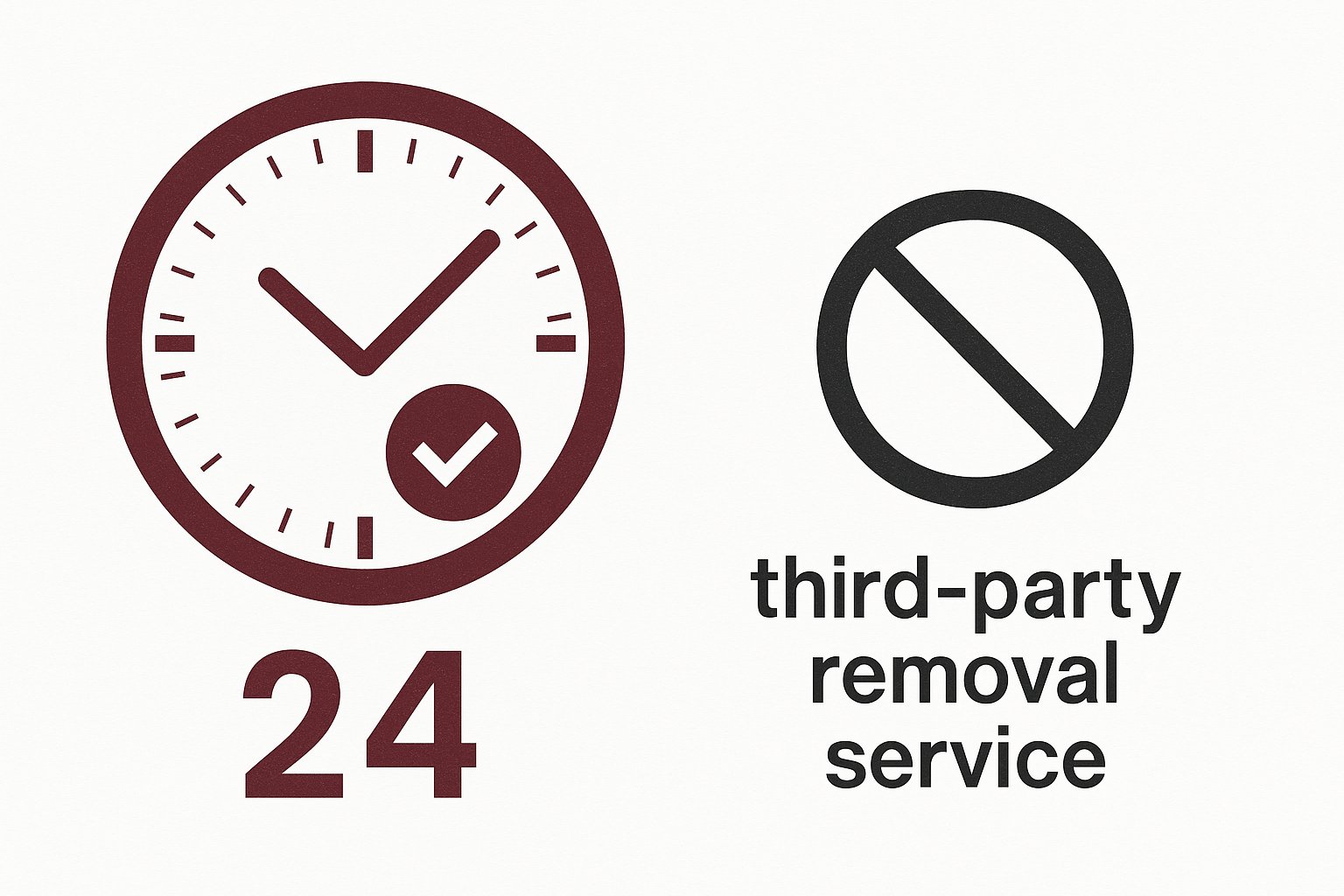
The twenty-four hour cool-off runs after your minimum period has ended and after you have requested to come off. It does not run during the minimum period. It runs alongside a scheme decision to release your details from the register, and it is the specific delay between your request and the release. During that twenty-four hours the block continues to operate at every UK-licensed operator. If you attempt to sign in at a UK-licensed site during the twenty-four hours, the operator's registration check will still catch your details against the register and decline the attempt. On the offshore side of the picture, nothing changes with the passage of the cool-off, because the offshore operators do not check the register in the first place.
The cool-off is a safety valve, not a bureaucratic step. It gives a person who has taken the decision to come off a defined window in which the decision can be reconsidered without the register having lifted. In the practical experience reported by GamCare advisers and by GamStop's own operations team, a proportion of people who initiate the request do reconsider during the twenty-four hours, and the mechanism is calibrated to make that reconsideration possible. If you make the request, feel unsettled during the cool-off, and contact the scheme before the twenty-four hours are up, the request will be cancelled and the block will remain in place without any further formality. That is the mechanism working as intended.
Key points
- The minimum period cannot be shortened on any request, on any evidence, from any person
- The twenty-four hour cool-off runs only after the minimum period has ended and after the request to come off has been made
- If you do nothing after your minimum period expires, GamStop extends the exclusion for a further seven years
The seven-year auto-extension explained
The seven-year auto-extension is the scheme's response to the case in which a person's minimum period ends and no positive action follows. In that case the exclusion continues, and continues for a substantial further period, because the scheme reads inaction after expiry as a preference for continued protection rather than as an intention to return to gambling. The extension is not an administrative default set by convenience. It reflects the same design principle as the minimum period, being that the scheme should behave, at every point where a decision is not clearly taken, in the direction of continued exclusion. The bias is protective. It is meant to be.
What that means in practice is that the choice to come off is a choice you have to make. If you have reached the end of a minimum period and you are unsure, doing nothing is not neutral, because doing nothing is the mechanism through which the exclusion is extended. If continued exclusion is what you want, then doing nothing is a rational choice. If ending the exclusion is what you want, you have to take the six-step route described earlier. The scheme is written this way because it produces a lower rate of unintentional reversal than the alternative design would produce, and the lower rate of unintentional reversal is precisely the effect the scheme was designed to achieve.
A closer look
Where the auto-extension causes a person on the register to feel trapped, the route out is the same route as the one described in section two of this page, being the deliberate request to end the self-exclusion. The auto-extension does not make coming off harder. It simply requires the same steps that a normal expiry would have required. Every registered person can request an end at any time after the minimum period, whether that request comes on the first day after expiry or seven years after that day, and the scheme's process is the same either way. If the request has been made in the past and cancelled, that history does not affect the process for a fresh request.
06Third-party removal services, why they are a scam
The advertising for third-party removal services is a genuine problem in the search results around this topic. The services present themselves as legitimate businesses. They use language borrowed from the regulator, borrowed from GamStop, borrowed from the language of consumer protection more generally. They advertise themselves through paid search, through affiliate networks and through content sites written to look like independent guidance. The advertising claims to end a GamStop registration on payment of a fee, to hasten a minimum period, or to arrange access to UK-licensed operators while the block is technically still active. None of those things is deliverable, and no third party has any relationship with the scheme that would allow them to be. If they had, they would be operating as agents of the scheme, and the scheme publishes no list of such agents because there are none.
The mechanics of the scam are worth understanding. The register is held by GamStop. It is a database that only the scheme has authority to modify. UK-licensed operators check submitted registration details against the register at the point of registration and at the point of login. No third party can modify the entries in that register. What a third-party service can do is take a fee, take the customer's identifying details, and either disappear or point the customer at an offshore operator that would have taken them without any of the intermediary steps. In neither case has the register been lifted. In neither case has anything been delivered that was not available for free through the scheme's own route. From an advertising-standards position the claims made by these services would not survive a substantive complaint under the CAP Code. Because the services are offshore and because their advertising rides on offshore search visibility, the claims continue to appear.
The forensic tells of a fake removal service repeat across the sector. A domain registered within the previous twelve months, held behind a privacy service, hosted on the same servers as a small cluster of near-identical sister sites. A phone number that is only ever answered by a chat script. A trust-signal footer that lists regulators the site has never heard from and charities that have never heard of the site. Reviews on aggregator platforms that are all from the same three-month window and use the same phrasing. Prices quoted in cryptocurrency for a service that would, if genuine, be sold through the licensed sector at no charge. Any two of those signals in combination indicate a service that no ordinary business would recognise, and the presence of the fee alone is enough to end the enquiry. A reader who has already paid such a fee has a route through their card provider to seek a chargeback, and no obligation to continue the correspondence the service will attempt to initiate after the payment has cleared.
Harm-reduction alternatives while you wait
If you are inside a minimum period and struggling with the wait, the most useful step is not to plan for the moment the period ends but to reduce your exposure during the wait. The Gordon Moody residential programme accepts self-referrals for people whose gambling harm has been substantial, and the NHS gambling clinics that now operate in England, Wales and Scotland accept referrals through general practice. The GamCare live-chat service runs alongside the helpline for callers who prefer not to speak on the phone. GamAnon offers peer-support for family members. Each of those routes is free at the point of use, and each is described in more detail on the getting-support page of this site.
Alongside the treatment routes there are practical steps to reduce the surface area of the risk. Turn on the gambling block inside your banking application on any card you hold. Ask your bank for a written record of the cool-off period that applies when the switch is turned off. Consider a device-level content block on the phone, the tablet and the computer you use most, which can be arranged through the parental-control settings on the device or through a paid content-filter subscription. Move the applications that connect you to offshore operators off the home screen and, where possible, off the device altogether. Reduce the availability of ready cash by adjusting the withdrawal limits on your current account. None of those steps is a substitute for the scheme itself, and each of them extends the friction that the scheme depends on.
The wait during a minimum period is easier to hold when it is structured. Some of the people GamCare speaks with describe the first weeks as the hardest, and describe the change in the pattern once the wait has a shape to it. A weekly appointment with an adviser, whether by phone or by live chat, produces one of those shapes. Attendance at a peer-support meeting produces another. A shared calendar with a family member for the moments in the day that used to be the moments of play produces a third. None of those steps is a treatment programme. Each of them is a small piece of routine that supplies structure to a period that would otherwise take its shape from the absence of the activity that had previously filled it. The route toward the scheme working is the accumulation of small pieces of that structure across the weeks and months of the minimum period, until the moment the period ends is no longer the moment on which the whole plan turns.
08How to call GamCare before you decide
The National Gambling Helpline is the resource that sits at the top of every page of this site, and it is the resource that this section directs you to before you decide anything. The number is 0808 8020 133. Calls are free from landlines and from every UK mobile network. They do not appear on the caller's phone bill. The advisers are trained, they answer around the clock, and they do not push callers toward a specific outcome. If you call at the end of a minimum period, the adviser will not tell you to remain on the register and will not tell you to come off. What the adviser will do is give you the space in which the decision becomes clearer, and will describe the treatment routes, the money-tool routes and the family-support routes that are available regardless of the decision.
If you would rather write than call, the GamCare live-chat service runs through the same infrastructure and reaches the same advisers. If your first language is not English, the helpline can arrange interpretation. If you are calling on behalf of someone else, the advisers will speak with you and can point you to family-support routes. If the reason you are on this page is that a member of your family is coming to the end of a minimum period and you are worried, calling before the decision is made is better than calling after it. The helpline is not an obstacle in the path. It is the resource that the state and the charitable sector maintain, at no cost to you, precisely for the moment you are in.
Read next
- GamStop explained, the scheme, the periods, the checks
- The legal position for UK players outside GamStop
- The risks, explained without the marketing
- Payments and checks, banks, cards, crypto, KYC
- Getting support, helplines, clinics, family, money
Sources and verification
Verified against the scheme mechanics published on gamstop.co.uk, alongside the Gambling Commission's guidance on multi-operator self-exclusion. Last checked 5 August 2026.
Frequently asked questions
Can any third party lift a GamStop registration for me
No. The register is held by the scheme and is checked by every UK-licensed operator against the details you registered under. No third party has access to that register. A service that advertises otherwise is either selling a service that does not exist or offering to help you evade the check at unlicensed operators, which is a separate matter and one that does not lift the block.
Does the block lift automatically at the end of my minimum period
No. At the end of your minimum period, GamStop does not remove your details from the register. You have to contact the scheme, ask for the block to end, and wait for the twenty-four hour cool-off. If you do nothing after the minimum period expires, the exclusion continues for a further seven years.
What does the twenty-four hour cool-off actually do
It creates a fixed delay between your decision to come off the scheme and the moment the block is actually lifted. The delay exists because self-exclusion works only if it is difficult to reverse in the moment. Twenty-four hours is enough time for a decision made under pressure to be reconsidered without the register lifting first.
How will I know the block has been lifted
GamStop sends a confirmation communication to the email address held on the register. Until you have received that confirmation, treat the block as still active. UK-licensed operators cannot show you a live status of your registration, so the confirmation from the scheme is the reliable evidence of the change.
What should I do if I feel I have made the wrong decision after coming off
Register again. The scheme will accept a new registration at any time, and a new registration will apply immediately. Nothing prevents a person who has come off from reversing that decision within days or hours. If the pull to gamble is strong enough that you are asking the question, calling the National Gambling Helpline on 0808 8020 133 is the step that changes the pattern.
Talk to someone today
The National Gambling Helpline is free, confidential and open 24 hours a day, seven days a week.